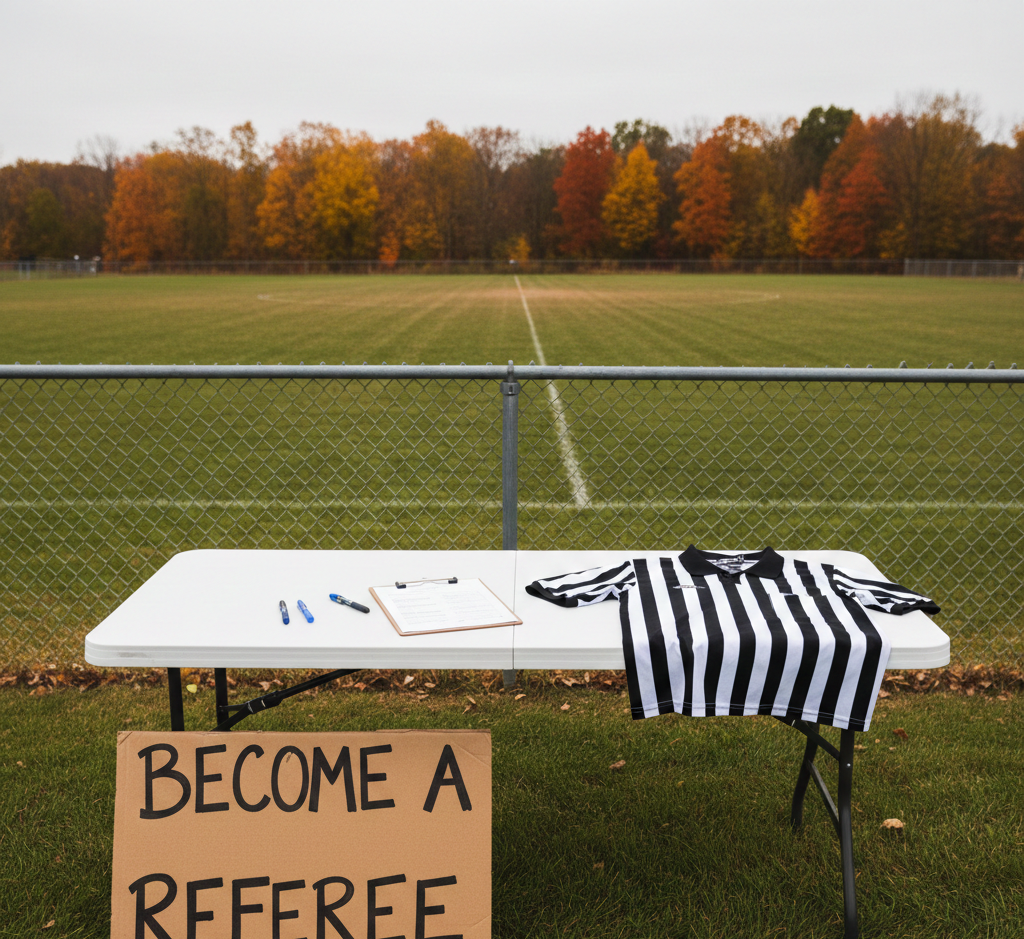
A referee is missing. The game is delayed by half an hour while you scramble to find a replacement. Parents get frustrated, coaches keep checking the time, and players are left waiting.
This situation happens every day in youth and adult sports leagues. While the delay is clear, the real costs of poor referee scheduling go far beyond just starting late.
Let's look at what ineffective referee management really costs leagues and how you can address it.
The No-Show Problem
Referee shortages are a known issue. According to the National Federation of State High School Associations (NFHS), approximately 50,000 high school officials have left since the 2018-19 season. Research from the National Association of Sports Officials (NASO) found that abuse from parents and coaches is a primary factor driving officials away, with over 50% of surveyed officials reporting they have feared for their safety due to spectator or coach behavior. Poor scheduling also contributes to the shortage.
When referees take assignments weeks ahead but cancel at the last minute, the problems only grow:
Last-minute scrambling: You might spend 30 to 60 minutes calling backups, often during your workday or family time. Each no-show means at least an hour spent solving the problem.
Overworked fill-ins: The same dependable referees get called again and again because they rarely refuse. This leads to burnout. Consider a scenario where a referee works 35 games in a month to cover gaps and doesn't come back the next season.
Unqualified substitutes: If you can't find a certified referee, you use whoever is available. A parent volunteer may have good intentions, but they lack the training and authority to run a competitive game well.
Game cancellations: Sometimes, there's just no one to fill in. The game is postponed, which means rescheduling and more complications with facilities, teams, and other officials.
Leagues with poor scheduling systems can experience significant no-show rates. Over the course of a full season, these disruptions add up, with each incident requiring time to resolve and contributing to coordinator burnout.
Wasted Travel Time and Expenses
Poor scheduling doesn't consider location. As a result, referees drive long distances they could avoid, wasting both time and money.
Here's a real example: A referee from North County is sent to a game 40 miles south at 10 a.m., then back to North County for a 2 p.m. game. That's over 80 miles of extra driving and wasted time between games.
When this happens all season, the costs quickly add up:
Referee dissatisfaction: Every hour spent driving is time away from family or other work. When referees figure out their real hourly pay after travel and gas, many decide it's not worth it and quit.
Environmental waste: Extra travel wastes fuel and increases the carbon footprint, which is a growing concern for younger referees.
Missed opportunities: In the time spent driving to one faraway game, a referee could have worked three local games instead.
Smart scheduling groups games by location and time. If a referee is free all Saturday afternoon, give them several games at the same place. The technology for this has been around for years, but many leagues still schedule by hand without thinking about travel.
Referee Burnout and Retention
Here's a concerning trend in youth sports: according to NASO, the majority of new officials quit within their first few years. The constant pressure, verbal abuse, and bad scheduling push people out just as they're getting good at the job.
Burnout manifests in several ways:
Scheduling fatigue: Referees who get games at times they can't work, or who keep getting assignments that ignore their preferences, often just stop accepting games.
Favoritism perceptions: When scheduling isn't clear or fair, referees think there's favoritism. "Why does John get all the high-paying playoff games while I get Tuesday morning youth games?" This leads to resentment and less engagement.
Lack of recognition: Reliable, skilled referees deserve better assignments, more flexibility, and top games. When scheduling is random, it's hard to reward and keep your best officials.
Replacing a referee is more expensive than most coordinators realize. Besides background checks and certification fees, there's significant time spent on training and onboarding. New referees make more mistakes and get more complaints, requiring additional coordinator attention. When you factor in all these hidden costs, the true expense of losing an experienced referee can be substantial.
Retention matters significantly. For example, a league that improves retention from 70 percent to 90 percent would save thousands in hiring and training costs while maintaining higher game quality with more experienced officials.
Impact on Game Quality
This is where poor referee scheduling affects players and teams directly. If you can't get qualified, rested referees for games, the quality drops:
Rotating referees, especially those who are new or unfamiliar with your league's rules, leads to inconsistent game management.
Overworked referees lose focus, react more slowly, and may not be in the right position. As a result, they miss or make wrong calls during games.
If you can't keep experienced referees, you end up relying on newer, less skilled officials. This is a problem during playoff and championship games, when you need your best referees.
Parents and coaches see these problems. They might not know it's a scheduling issue, but they notice when games aren't as good. This can affect their satisfaction and whether they come back next season.
Your Association's Reputation
Your reputation is tied to everything you do. Poor referee scheduling sets off a chain reaction:
Games start late or get cancelled. Parents get frustrated. People say your league is disorganized. Fewer people sign up, revenue drops, and you have less money for good referees. The cycle continues.
With parents having choices about where to register their kids for sports, operational excellence matters. The league that runs smoothly, starts games on time, and provides consistent officiating wins participants from competitors that don't.
How referees see your league is important too. They talk to each other. If they hear your league has messy scheduling, ignores their availability, or asks for last-minute changes, the best referees will go somewhere else.
Solutions That Actually Work
The good news is you can fix these problems. Here's what good referee scheduling should look like:
Centralized visibility means all referees can see which games are available, share preferences, and accept assignments in one place. This gets rid of confusing group texts and email chains.
Automated matching uses software to consider where referees are, when they're available, their skill level, and preferences when making assignments. Modern scheduling software can dramatically reduce the time spent on manual coordination, often with better results than hand-built schedules.
Confirmation systems send automatic reminders 48 to 72 hours before games and require referees to confirm. If someone doesn't confirm, you have time to find a replacement before it becomes a problem.
Geographic optimization: Algorithms minimize total travel time across all referees, clustering assignments intelligently.
Performance tracking collects data on referee reliability, cancellation rates, and feedback from games. Reliable referees get better assignments, while those who cancel often stop getting the top games.
Platforms like SyncedSport put these best practices on autopilot. This makes things easier for coordinators and helps keep referees happy and returning.
The Bottom Line
Poor referee scheduling costs your league in ways that don't appear on financial statements but still impact your bottom line:
- The coordinator's time wasted on last-minute firefighting
- Referee burnout and turnover
- Wasted travel time and expenses
- Degraded game quality
- Damaged reputation with participants and officials
The solution isn't working harder or recruiting more referees into a broken system. It's implementing smarter scheduling processes that respect referees' time, optimize efficiency, and create positive experiences for everyone involved.
When referees feel respected and scheduling is seamless, they stick around longer, perform better, and recruit their peers to join. That's how you break the cycle of referee shortages and constant crisis management.
See how SyncedSport's automated referee scheduling helps leagues reduce no-shows and improve retention at syncedsport.com.