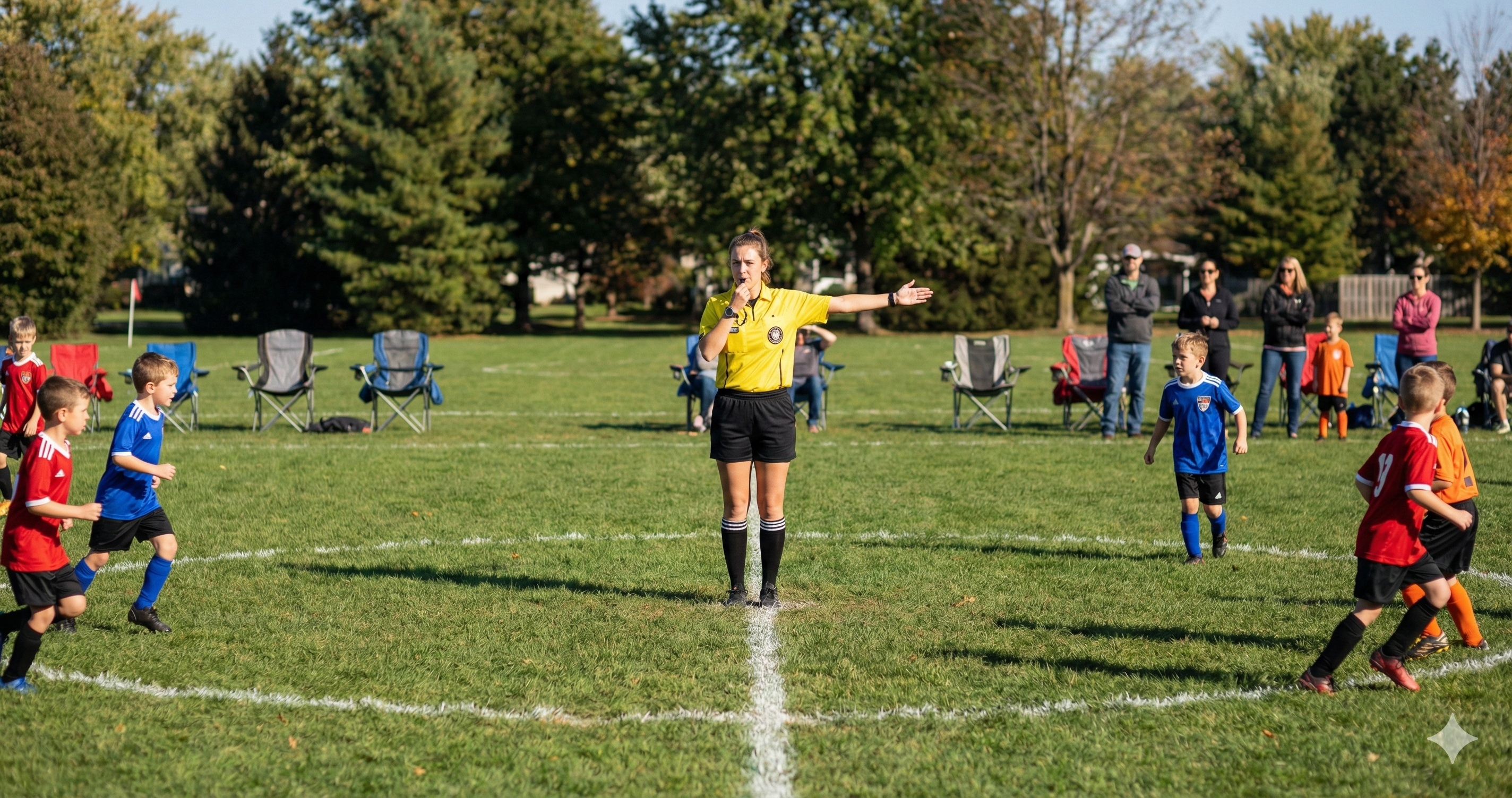
Managing referee assignments for youth soccer leagues can be a real challenge. With recreational and travel teams, different age group needs, tournament weekends, and assistant referee coordination, league coordinators often spend many hours each week just on scheduling.
The right soccer referee assignment tool can transform this time-consuming process into a streamlined operation that benefits everyone involved—from the coordinators to the referees themselves.
Understanding the Complexity of Youth Soccer Officiating
Youth soccer leagues run several types of games at the same time. On a typical Saturday, there might be U8 recreational games with one center referee, U14 travel matches needing a three-person crew, and U17 competitive games with experienced officials.
Each level has its own needs. Recreational leagues often welcome new referees who are gaining experience with younger players. Travel and competitive leagues need more experienced officials who can handle faster games and tougher situations.
With approximately 3 million youth registrations in organized soccer through U.S. Youth Soccer alone, larger leagues may handle hundreds of games each weekend during peak season. When you include assistant referees for higher-level games, that translates to a large number of individual referee positions to fill.
Recreational vs. Travel Teams: Different Needs, One System
The differences between recreational and travel soccer bring unique scheduling challenges. Rec leagues focus on participation and development, usually playing on local fields with flexible schedules. Travel teams play at a higher level, often going to different venues and needing certified officials.
A good soccer referee assignment tool should handle both types of leagues easily. Here's how that works in practice:
For Recreational Games:
- Single-referee assignments for younger age groups (U8-U10)
- Opportunities for newly certified officials to gain experience
- Flexibility for last-minute changes as volunteer coaches adjust schedules
- Clear communication about field locations and parking
For Travel Teams:
- Three-person crews (center referee plus two ARs) for competitive matches
- Matching official certification levels with game requirements
- Coordinating travel time between different venues
- Higher game fees reflected in the assignment
The best systems let coordinators set different rules and preferences for each division, all from one dashboard.
Age Group Requirements: Matching Experience with Expectations
Not every referee is qualified or comfortable with every age group. A new 14-year-old referee might do well with U8 games but may not be ready for U16 competitive matches. In the same way, your most experienced officials might prefer high school games over elementary-level rec soccer.
Smart assignment systems let you set rules based on:
- Referee certification level (Grade 9, Grade 8, regional, national)
- Age of the referee relative to players
- Previous experience with specific age groups
- Referee preferences and comfort zones
Matching referees to the right games is important for both game quality and keeping referees coming back. When officials get assignments that fit their skills, they are more likely to keep officiating each season.
Matching referees to appropriate age groups can help reduce mid-season dropouts. When referees feel ready and confident, they show up more often.
Tournament Weekends: Coordination at Scale
Tournament weekends are the biggest challenge for any assignment system. A typical youth soccer tournament might have over 100 games in two days, spread across many fields with tight schedules.
Successful tournament coordination requires:
Advanced Planning
- Blocking out referee availability weeks in advance
- Creating crew assignments that keep the same AR pairs together
- Building in adequate rest time between matches
- Planning for geographic clustering to minimize driving
Real-Time Flexibility
- Quick reassignment capabilities when referees cancel
- Weather delay management and game rescheduling
- Communication channels for last-minute updates
- Backup referee pools for emergencies
Fair Distribution
- Ensuring game fees are distributed equitably
- Preventing referee burnout with too many consecutive assignments
- Balancing experienced and newer officials throughout the tournament
- Tracking total assignments per referee for payment purposes
Modern scheduling platforms can handle much of this complexity automatically, using smart algorithms to suggest the best assignments while coordinators still have the final say.
Assistant Referee Assignments: The Often-Overlooked Challenge
Center referee assignments usually get the most attention, but organizing assistant referees (ARs) adds another challenge. Good AR work is important for competitive matches, but these positions are often harder to fill.
Key considerations for AR assignments include:
Crew Compatibility
Experienced referees often develop working relationships with specific ARs. When possible, keeping successful crews together improves on-field communication and decision-making quality.
Experience Levels
ARs need different skills than center referees, such as offside judgment, positioning, and flag technique. Even your best center referee might need AR training to do well in that role.
Scheduling Logistics
All three officials must arrive at the same field at the same time. This means coordinating three different schedules, travel routes, and availability times.
Development Opportunities
AR positions give valuable experience to referees who want to earn higher certifications. Assigning AR roles thoughtfully can help develop your next group of center referees.
Automated scheduling can help reduce assignment delays. When all three officials are ready and arrive on time, games start on schedule and run well.
Tips for Improving Soccer Referee Assignments
A few best practices stand out for improving soccer referee assignments:
-
Open assignment windows early. Try to give referees at least two weeks' notice. Many officials have jobs and families, so they need time to plan.
-
Set up clear ways to communicate. Use email, text, or app notifications so referees can quickly confirm their assignments and let you know about any conflicts.
-
Have extra referees on hand—many coordinators recommend maintaining a buffer of extra referees to cover cancellations and prevent burnout.
-
Keep track of which referees show up on time, communicate well, and get good feedback. Give the most reliable officials the best assignments.
-
Use automated systems to track payments. Manual fee calculations can lead to mistakes and delays, but automation helps referees get paid correctly and on time.
The Technology Advantage
Manual systems like spreadsheets, email chains, and phone calls can work for small leagues with 20-30 games each weekend. But as leagues get bigger, these methods take too much time.
Modern assignment tools can free up significant coordinator time during the busy season, allowing more focus on referee training, coach education, or watching games instead of handling logistics.
A good system should be easy for referees to use and give coordinators strong controls. Referees can see open games, pick assignments that fit their schedule, and get reminders. Coordinators can check coverage, reassign games quickly, and create payment reports right away.
Moving Forward
Youth soccer relies on dedicated referees and the coordinators who help them. Any improvement in the assignment process, like better AR coordination, smarter age group matching, or easier tournament scheduling, helps the whole league run better.
The referee shortage in youth sports is a serious issue. NASO data indicates that the majority of new officials quit within their first few years, and the 2023 NASO survey found that 79% of officials reported taking more assignments due to the shortage. Efficient systems help retain the referees we have and make things better for new officials just starting out.
Learn how SyncedSport manages complex youth soccer scheduling with smart assignment tools designed for multi-level leagues, tournament planning, and assistant referee management.