Coordinating hockey referees comes with its own set of challenges. Early morning ice times, complicated certification levels, scheduling across different arenas, and deciding between two- or three-official systems all call for special management strategies.
If you're coordinating officials for youth hockey leagues, you need a hockey referee management system designed specifically for the sport's distinct requirements—not a generic scheduling tool that treats every sport the same.
The Early Morning Reality of Hockey Scheduling
Ice time is both costly and scarce. Unlike soccer or baseball, hockey games are often scheduled in tight windows based on when the rink is available. This leads to 6:00 AM games on Saturdays and 9:00 PM games during the week.
This scheduling reality directly impacts referee availability. Not every official can commit to pre-dawn assignments, especially those balancing regular jobs or driving in winter weather from distant locations.
Effective hockey referee management systems need to account for:
Time-of-Day Preferences Allow referees to indicate preferred time slots. Some officials specifically want early morning games. Others can only work evenings or weekends. Matching assignments to availability reduces cancellations dramatically.
Geographic Clustering When you have a 6:00 AM game at one rink, try to schedule that same official for the 7:30 AM game at the same location. This minimizes travel and makes early wake-ups more worthwhile.
Minimum Notice Requirements Unlike outdoor sports, hockey games rarely get cancelled due to weather. But the early time slots mean officials need adequate advance notice. Last-minute 5:00 AM phone calls asking someone to cover a game in 90 minutes rarely end well.
Implementing time preference tracking can lead to significant improvement in weekend morning coverage. When officials receive assignments matching their availability patterns, they commit more reliably.
Two-Official vs. Three-Official Systems: Staffing Implications
One of the most significant decisions for hockey leagues is whether to use two-official (two-referee) or three-official (one-referee, two-linesmen) systems. This choice impacts everything from game quality to coordinator workload to league budgets.
Two-Official System (Two Referees)
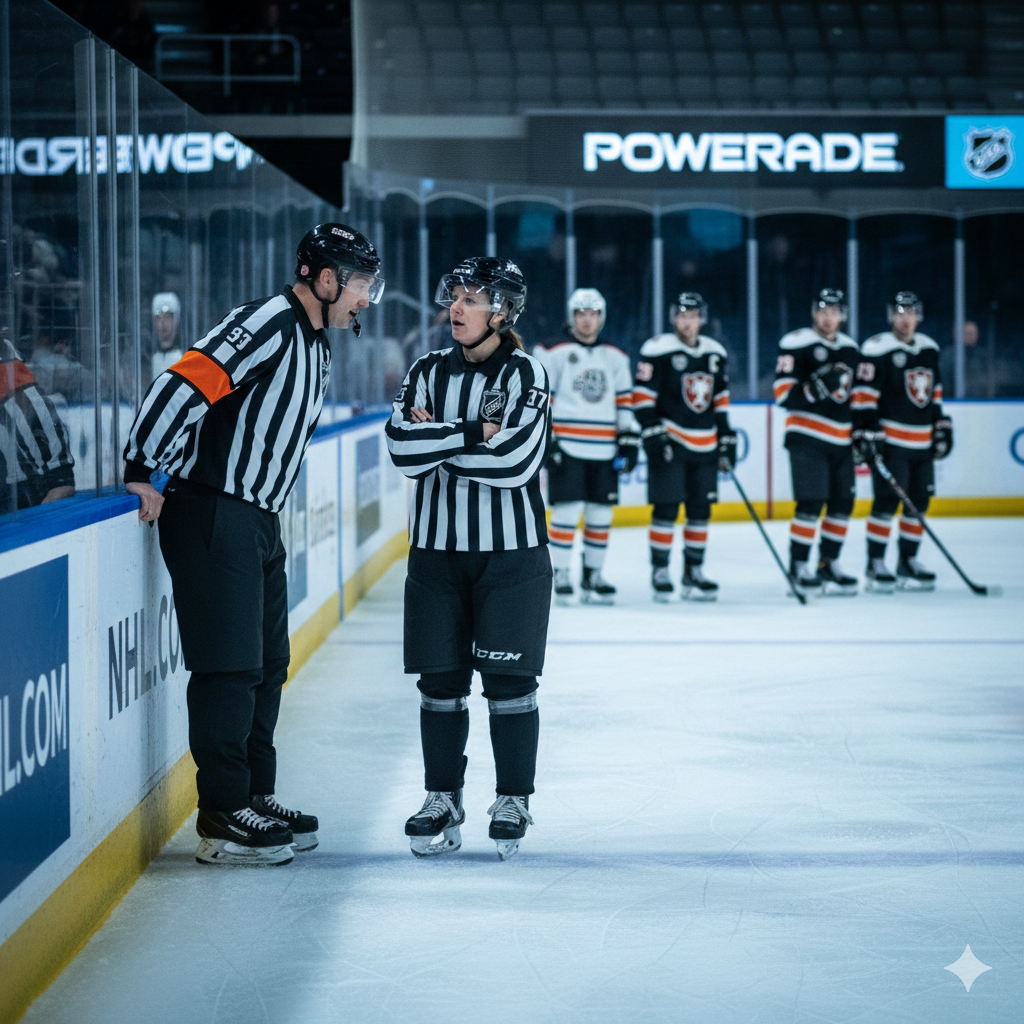
The two-referee system places two officials on the ice, both handling penalty calls and offside/icing decisions. It's common in youth hockey through bantam levels and some high school leagues.
Advantages:
- Lower cost per game (two officials instead of three)
- Simpler scheduling (fewer positions to fill)
- Good game coverage for most youth levels
- Allows officials to develop comprehensive skills
Coordination Considerations:
- Partner compatibility matters significantly
- Both officials need similar experience levels
- Either referee can make any call, requiring good communication
- Easier to find coverage when someone cancels
Three-Official System (One Referee, Two Linesmen)
Higher-level youth hockey, high school varsity, and junior leagues typically use three officials: one referee handling penalties and two linesmen covering offside, icing, and face-offs.
Advantages:
- Superior game coverage and positioning
- Specialized role development
- Required for higher-level certifications
- Matches the system used in college and professional hockey
Coordination Considerations:
- 50% more assignments to fill per game
- Need to match certification levels appropriately
- Referee position requires higher certification
- Linesman positions offer development opportunities
- More complex when finding last-minute coverage
The system you choose should match your league level, budget, and available official pool. Many coordinators use two-official systems for younger divisions (mites, squirts) and three-official for older competitive levels (bantam, midget).
Your management system should handle both seamlessly, with different assignment rules and fee structures for each position type.
Arena Travel: The Hidden Time Cost
Unlike field sports where most games occur at a central complex, hockey leagues often operate across multiple arenas spanning significant geographic areas. In metro regions, referees might cover facilities 30-40 miles apart.
This creates scheduling challenges that coordinators must actively manage:
Travel Time Between Assignments
A referee finishing a game at 1:00 PM at Arena A cannot start a game at 1:30 PM at Arena B that's 25 miles away. Your system needs to account for:
- Driving time between facilities
- Time to de-ice skates and pack gear
- Weather conditions affecting travel (especially relevant in hockey markets)
- Parking and rink entry time at new facility
Smart scheduling builds in minimum buffer times—as a best practice, typically 60-90 minutes between games at different arenas.
Geographic Preference Zones
Many officials prefer working at certain arenas due to proximity to home or work. Letting referees indicate preferred facilities improves assignment acceptance rates and reduces travel-related cancellations.
Multi-Game Assignments at Single Venues
When possible, schedule the same official for multiple games at one arena. This maximizes their time investment while minimizing travel. An official working three games at the same rink in one day has better earning potential than three games at three locations.
Fuel Cost Considerations
Hockey officials in northern states often travel in challenging winter conditions. While game fees are standardized, excessive travel between distant arenas impacts net earnings. Coordinators who minimize unnecessary travel maintain happier, more committed official pools.
Implementing geographic clustering in the assignment process can lead to a substantial reduction in average referee drive time. Officials appreciate this consideration, which can contribute to better retention.
Certification Levels: Matching Officials to Appropriate Games
Hockey officiating has one of the most structured certification systems in youth sports. USA Hockey's officiating program includes multiple levels, each qualifying officials for specific game types.
USA Hockey certification levels include:
- Level 1: Entry level, typically for 8U through 12U (Mites through Pee Wees)
- Level 2: Intermediate youth hockey, typically 14U (Bantam) and younger
- Level 3: Higher-level youth through 17U (Midget), Senior hockey, and as linesman for Junior
- Level 4: All levels of USA Hockey, including national-level events
Each level requires specific training, testing, and on-ice evaluations. As officials progress, they're qualified for more challenging assignments.
Your hockey referee management system must:
Track Current Certifications Maintain up-to-date records of each official's certification level, including expiration dates and required recertification deadlines.
Enforce Minimum Requirements Prevent coordinators from accidentally assigning under-certified officials to games above their qualification level. This protects both the official and the league from liability issues.
Support Development Pathways Identify officials ready to move up certification levels and provide appropriate developmental assignments. An official working toward Level 3 needs exposure to bantam games with mentorship from experienced referees.
Handle Multi-Level Crews In three-official systems, the referee typically holds a higher certification than the linesmen. Your system should accommodate this hierarchy while ensuring minimum standards are met.
Manage Recertification Send automatic reminders when certifications are approaching expiration. A lapsed certification can sideline an official mid-season if not caught early.
Certification tracking might seem like administrative overhead, but it's essential for risk management and official development. Platforms like SyncedSport include built-in certification management that integrates directly with assignment rules.
Essential Features for Hockey Coordinator Success
Based on the common challenges hockey coordinators face, several critical system features stand out:
1. Position-Specific Availability
In three-official systems, an individual might be available to work as a linesman but not as a referee (or vice versa) based on certification and preference. Your system should track position-specific availability.
2. Partner Requests and Crew History
Some officials work particularly well together. Allowing partner requests—while maintaining fairness—improves on-ice performance and official satisfaction.
3. Game Fee Automation
Hockey has multiple fee structures: different rates for mites vs. midget, two-official vs. three-official, tournament vs. league games. Automated fee calculation prevents errors and ensures timely, accurate payments.
4. Weather and Ice Condition Alerts
While games rarely cancel, officials need to know about delayed starts due to ice resurfacing issues or facility problems. Push notifications keep everyone informed.
5. Assignment History and Performance Tracking
Track which officials consistently arrive prepared, communicate effectively, and receive positive feedback from coaches and rink staff. This data informs future assignments for high-stakes games.
6. Tournament and Showcase Management
Hockey tournaments often run across multiple days with games from 6:00 AM to 11:00 PM. Specialized tournament tools help manage high-volume scheduling while preventing official burnout.
7. Playoff Positioning
Postseason games should go to your most qualified, reliable officials. Year-round tracking data helps identify who deserves playoff assignments.
The Cost of Inefficient Systems
Manual hockey officiating coordination doesn't scale. Spreadsheets can't enforce certification requirements. Email chains can't account for travel time between arenas. Phone calls at 5:30 AM shouldn't be your backup plan for coverage gaps.
Coordinators using outdated systems like spreadsheets and email chains can find themselves spending a significant portion of their week on assignment management during the season. That's essentially a part-time job on top of their other league responsibilities.
Modern hockey referee management systems can substantially reduce this workload, even for large leagues. The time savings come from:
- Automated assignment suggestions based on availability, certification, and location
- Self-service portals where officials claim open games
- Instant notifications when coverage gaps appear
- Automatic payment calculations and reporting
- Built-in communication tools eliminating email threads
Making the Switch
If you're currently managing hockey officials through spreadsheets and email, the idea of switching systems might feel overwhelming. But the longer you wait, the more hours you waste on manual coordination.
The best time to implement a new system is during the off-season when game volume is low. This gives you time to:
- Import official contact information and certifications
- Set up arenas, travel times, and game fee structures
- Train referees on the new system
- Test assignments with preseason scrimmages
- Work out any issues before the regular season rush
The time savings and reduced stress from a modern system can make a meaningful difference for coordinators managing busy hockey seasons.
Looking Ahead
Hockey depends on skilled, committed officials who brave early mornings, winter weather, and challenging travel to ensure games run smoothly. The least we can do as coordinators is provide efficient systems that respect their time and make assignments transparent and fair.
See how SyncedSport handles the unique demands of hockey officiating with features built specifically for ice sports, including multi-arena scheduling, certification tracking, and both two-official and three-official system support.